A Review of “Life”
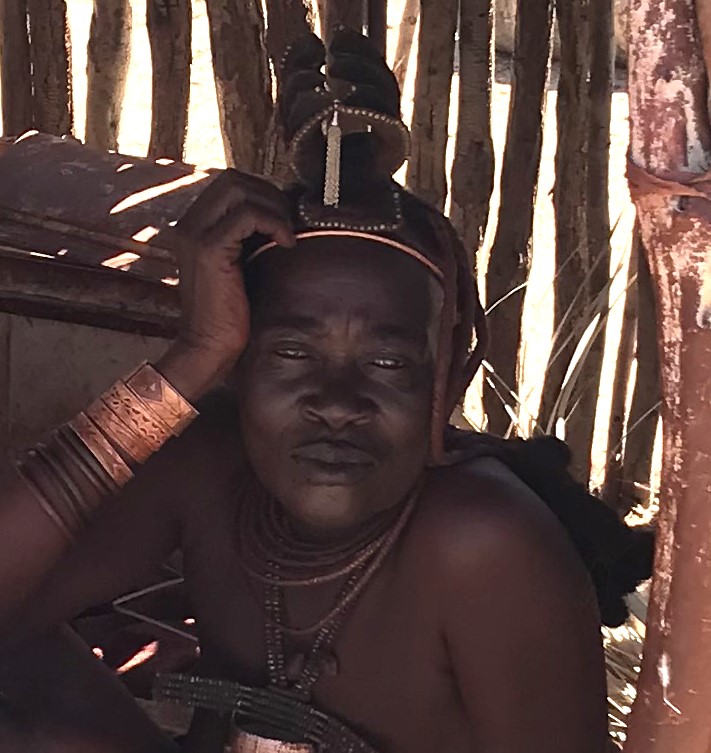
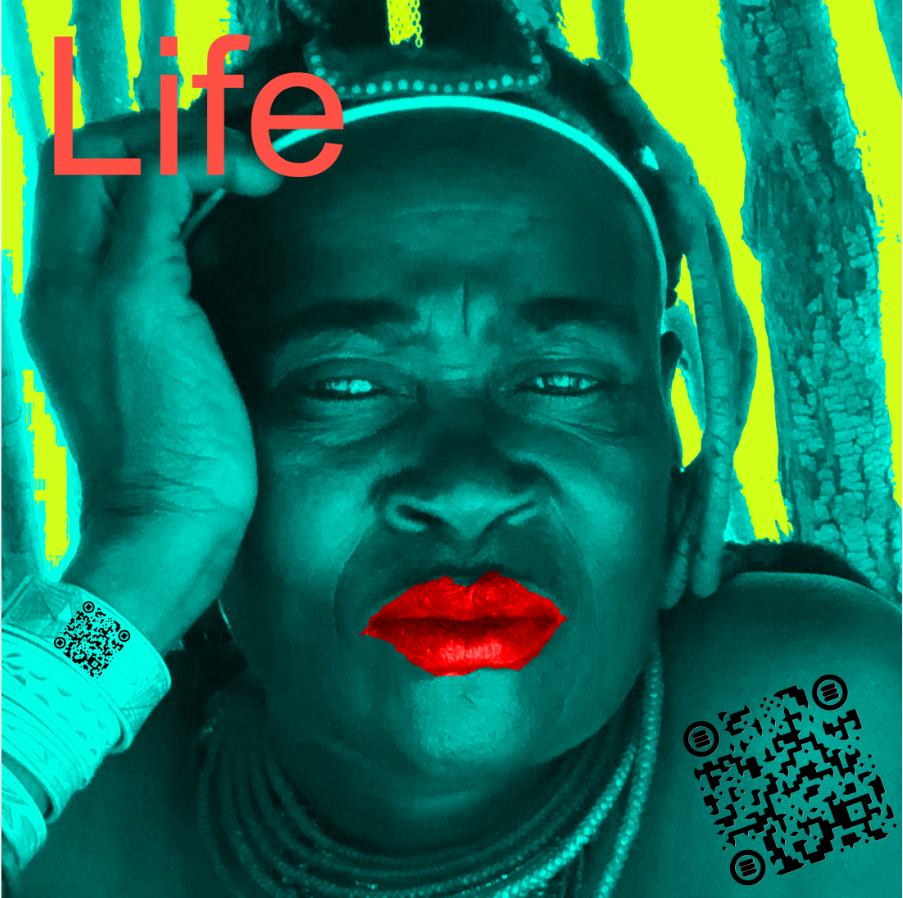
The work, titled “Life,” is a striking example of mixed-media art that builds upon a foundation of documentary photography. The base image captures a close-up portrait of a Himba individual, taken within the intimate setting of a kraal near Puros, Namibia. The subject is depicted sitting in the shadows of a small, primitive hut built from raw branches, a stark contrast to the scorching heat outside. The original photograph likely possessed a sense of raw authenticity, reflecting the traditional dress, jewelry, and expression of the subject.
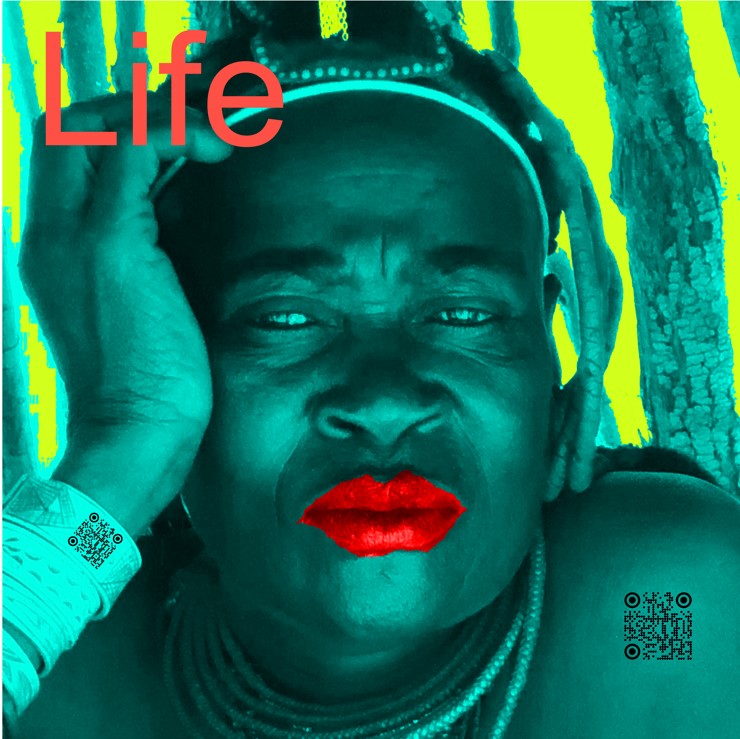
The artist, however, has transformed this authentic portrait into a vibrant and challenging piece by applying a stark, saturated color palette. The background is a jarring, almost neon yellow-green, while the subject’s skin and clothing are rendered in a deep, cool cyan. The most impactful and surreal element is the application of a vivid red to the subject’s lips, a stark and deliberate deviation from the natural tones of the original photograph. This deliberate choice of color creates an immediate tension between the subject’s traditional identity and the synthetic, graphic nature of the artistic additions.
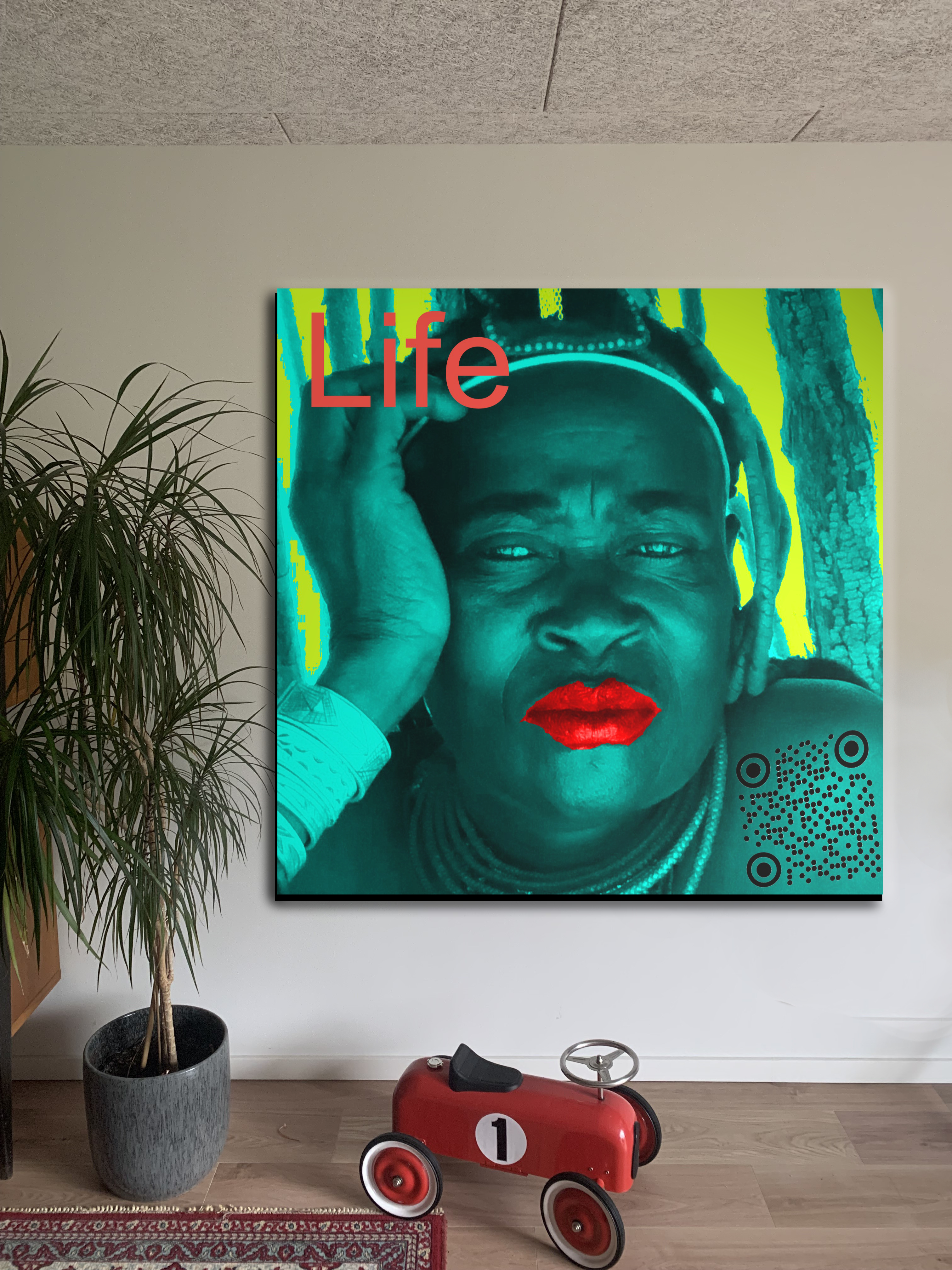
Furthering this tension is the digital overlay of the word “Life” in bold red text at the top left and a prominent QR code on the right shoulder. These elements forcefully pull the work into the modern, connected world, contrasting sharply with the timeless tradition of the subject. The work’s aesthetic is reminiscent of a commercial or a high-fashion magazine cover, but instead of featuring a professional model or celebrity, it presents a woman from the Himba tribe—a community far removed from the glamour and artifice of big cities and fancy publications. This choice is a powerful subversion of commercial aesthetics, using the language of advertising to bring attention to a world that is often overlooked or misrepresented. The word “Life” could be a simple, optimistic declaration or a more profound commentary on the enduring vitality of the Himba culture. The QR code, a symbol of instant access and information, adds an element of intrigue. It serves as a visual hyperlink, prompting the viewer to engage with the art beyond the canvas and explore the deeper context that the artist may have intended.
Overall, “Life” is a masterful and thought-provoking piece that bridges a gap between two seemingly disparate worlds: the documented past and the digitally-augmented present. It challenges the viewer to look beyond the surface, questioning the very definition of a portrait and the role of artistic intervention in cultural representation. The work is not merely a photograph or a digital creation; it is a powerful dialogue on identity, tradition, and the omnipresence of modern technology.