At a Herero graveyard with the eldest
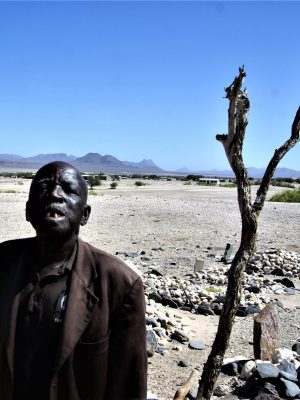
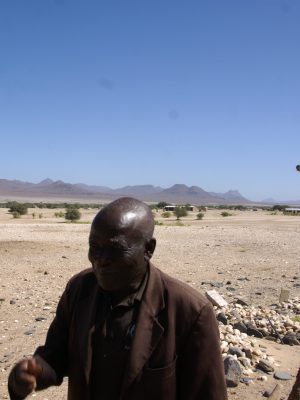
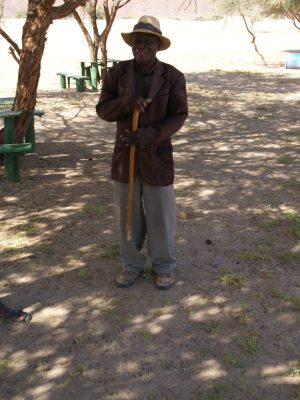
Although Dew, our local guide, doubted we would stumble upon a funeral, he suggested a visit to the elders’ burial site instead. He arranged for us to meet the village elder at the shop – and, at Dew’s insistence, we bought the old man a beer, which of course we did. Dressed in his finest black suit, weathered and worn much like himself, he joined us.
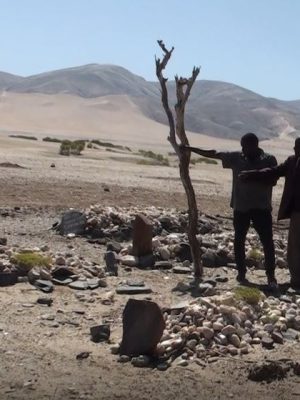
We drove out of town, then walked half a kilometer to the burial grounds. Only a few graves were clearly visible, but traces of many more lay hidden beneath the drifting sand.
The Elder generously shared the Himba traditions: When a Himba soul departs, there is a ceremony filled with song, drumming, and cattle offerings. The body is buried near the family home so the spirit can guide the living. Smoke from the fire carries messages between worlds, weaving pride and sorrow together in a ritual farewell. For the Himba, life and death are inseparable, and reverence for the ancestors is at the very heart of existence.
Here in Puros, a special graveside ritual is performed: one places a pinch of sand in the mouth, then blows it out again. Symbolic and powerful, acknowledging the cycle of life, “from dust you came, to dust you shall return.” By blowing the sand out, respect and humility are shown to the spirits. Following the Elder’s instructions, I did the ritual. He then declared the spirits satisfied, and we were allowed a closer look at the simple stone-marked graves.
He also explained other rites: for instance, initiation into adulthood sometimes involves knocking out the front teeth, both upper and lower. To my surprise, he mentioned that he himself was circumcised. I had thought of that practice as belonging to the Abrahamic faiths of the Middle East, not to animists in the desert. He noticed my astonishment and asked if I wanted proof. I politely declined with a strained smile. (All of this, of course, was translated by Dew, who proved to be quite a capable interpreter.)