
The next morning, we rose early, grabbed a quick coffee and a light breakfast, and listened carefully as the reception staff explained how best to find our way to the local cultural village. Armed with a hand-drawn map, we climbed into the car and set off. Soon the paved road gave way to a narrow, dusty track cutting through a landscape of scattered bushes, twisted trees, and an overwhelming sense of wilderness. We didn’t pass a single soul along the way, and the total isolation only heightened the adventurous spirit of the journey.
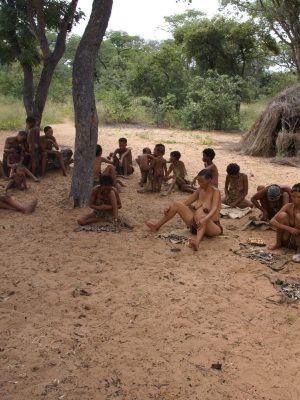
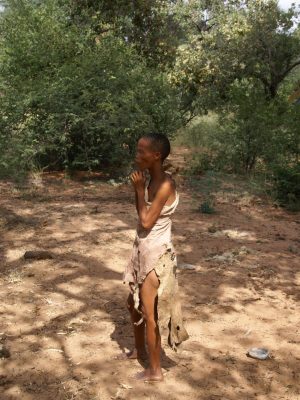
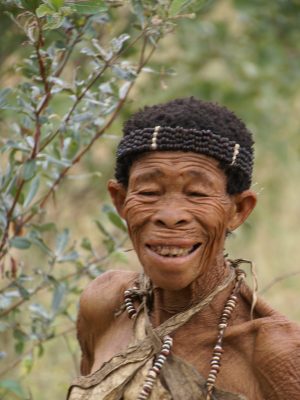
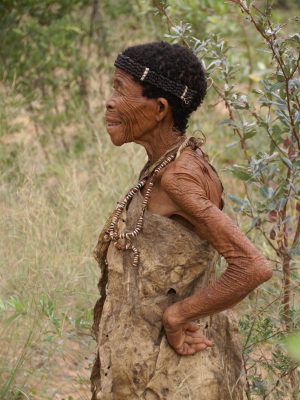
At last, we arrived. A young female guide greeted us with warm confidence. She spoke good English, though with a lilting accent that only added to the charm. It was immediately clear that we had reached a very special place. There were no other visitors, which gave the whole experience a unique, almost intimate atmosphere. Beneath the shade of an ancient tree, we were given a short introduction to the purpose of the site: to preserve and share their age-old traditions with the outside world.
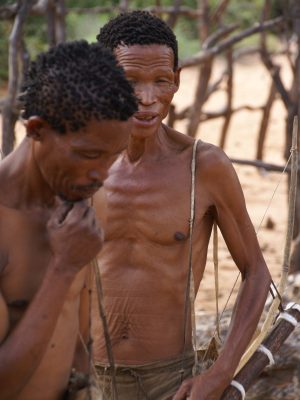
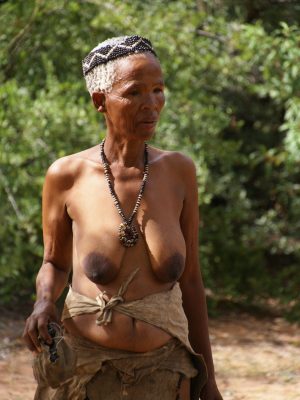
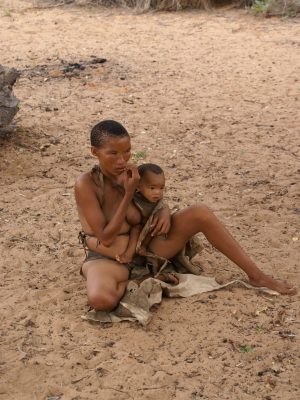
We had entered a living museum. I had heard of the concept before, but here it felt astonishingly authentic. A living museum is not about reenactments for tourists, but about reviving original traditions to prevent them from being lost altogether. It is both cultural preservation and community livelihood – a sustainable model where the local people themselves pass on their heritage while also benefiting economically. And here, we were in the company of the Ju/’Hoansi people, one of the oldest San groups, famed for their deep connection to the Kalahari Desert and their traditional hunter-gatherer way of life.
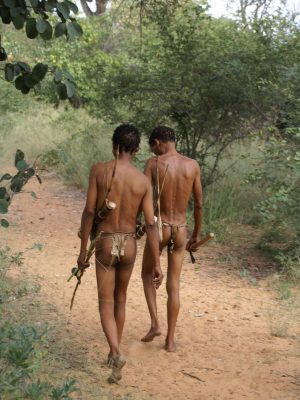
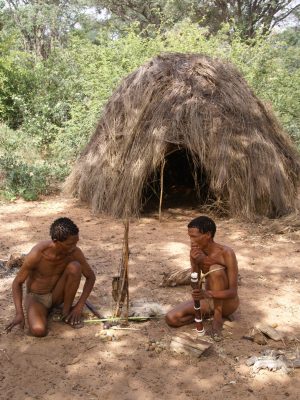
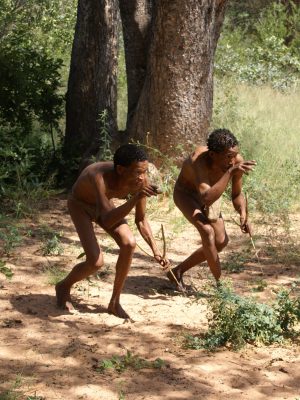
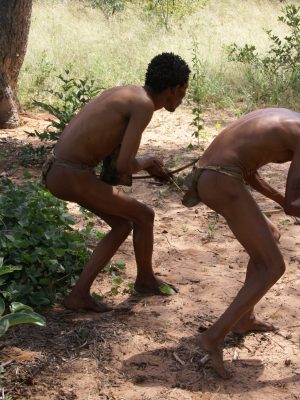
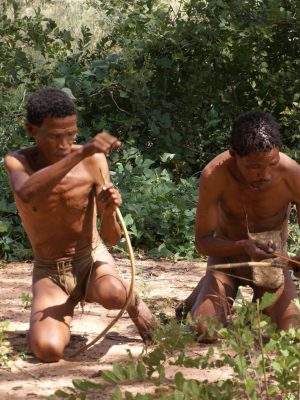
The first demonstration was fire-making. It was breathtaking to watch the locals, with calm precision, conjure sparks from wood and dry grass until – almost magically – a flame appeared. Every movement spoke of knowledge honed over thousands of years. Next, we were shown traditional hunting techniques: bows and poisoned arrows crafted from plants and insect larvae. We even tried our luck shooting at a target. Needless to say, our arrows missed spectacularly – a humbling reminder of the skill and patience survival here requires.
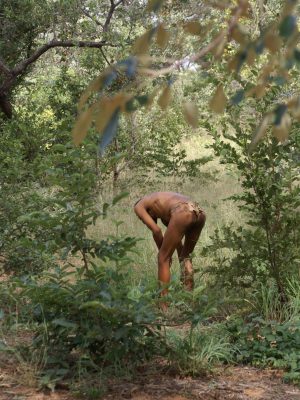
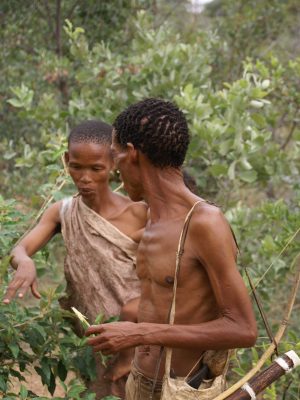
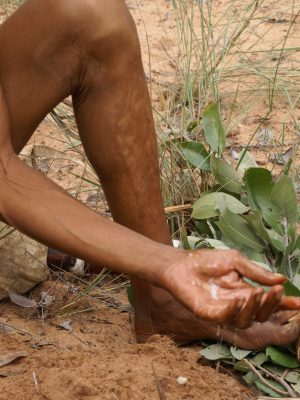
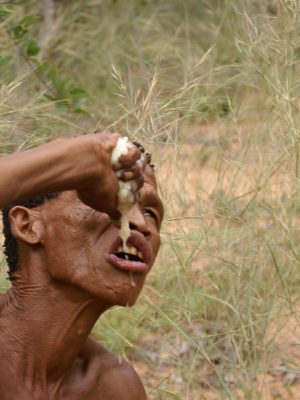
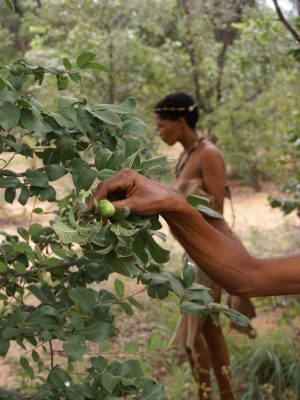
An elder then led us into the surrounding bush. With practiced ease, he revealed edible roots, berries, and herbs, explaining their medicinal uses and how they could provide vital water. He dug up a plump, juicy root, showed us how it could be eaten, then carefully replanted it so it could continue to grow for future generations. His gestures radiated wisdom, his movements a living testimony to the intimate bond between his people and the land.
Later in the afternoon, we were invited to witness a traditional dance around a crackling fire. Song, clapping rhythms, and pulsing steps fused into a social and spiritual ceremony. Although there was no full trance-healing this time, the intensity in the dancers’ eyes and movements was unmistakable. The rhythms were hypnotic, and it was easy to imagine how such dances had bound the community together for generations – as both celebration and communion with the spirit world.
Our guide explained that even a small handful of visitors like us could make a difference. By being there, we gave them the chance to keep their traditions alive, to pass them on to their children, and to share them proudly with the wider world – all while securing a modest income.
As we drove back beneath a sunset that painted the sky in warm hues, we felt inspired, humbled, and certain that this day would remain etched in memory – a rare glimpse into a timeless culture, deep in the heart of Namibia.