




Art in the Produce Aisle
Venue: Stakladen, Ringsted (the green-grocer section)
Artists: David Udbjorg & Ina Christensen
If you think art belongs in white cubes and hushed voices, this show cheerfully proves you wrong. Udbjorg and Christensen move the exhibition into the everyday, right between tomatoes, pumpkins and bunches of rosemary, so the first thing you notice isn’t a wall text but the scent of herbs and the soft clatter of shopping baskets. The effect is disarming and clever: color, smell and movement become curatorial tools, and suddenly paintings feel less like distant objects and more like companions in the weekly ritual of buying food.
The setting as idea
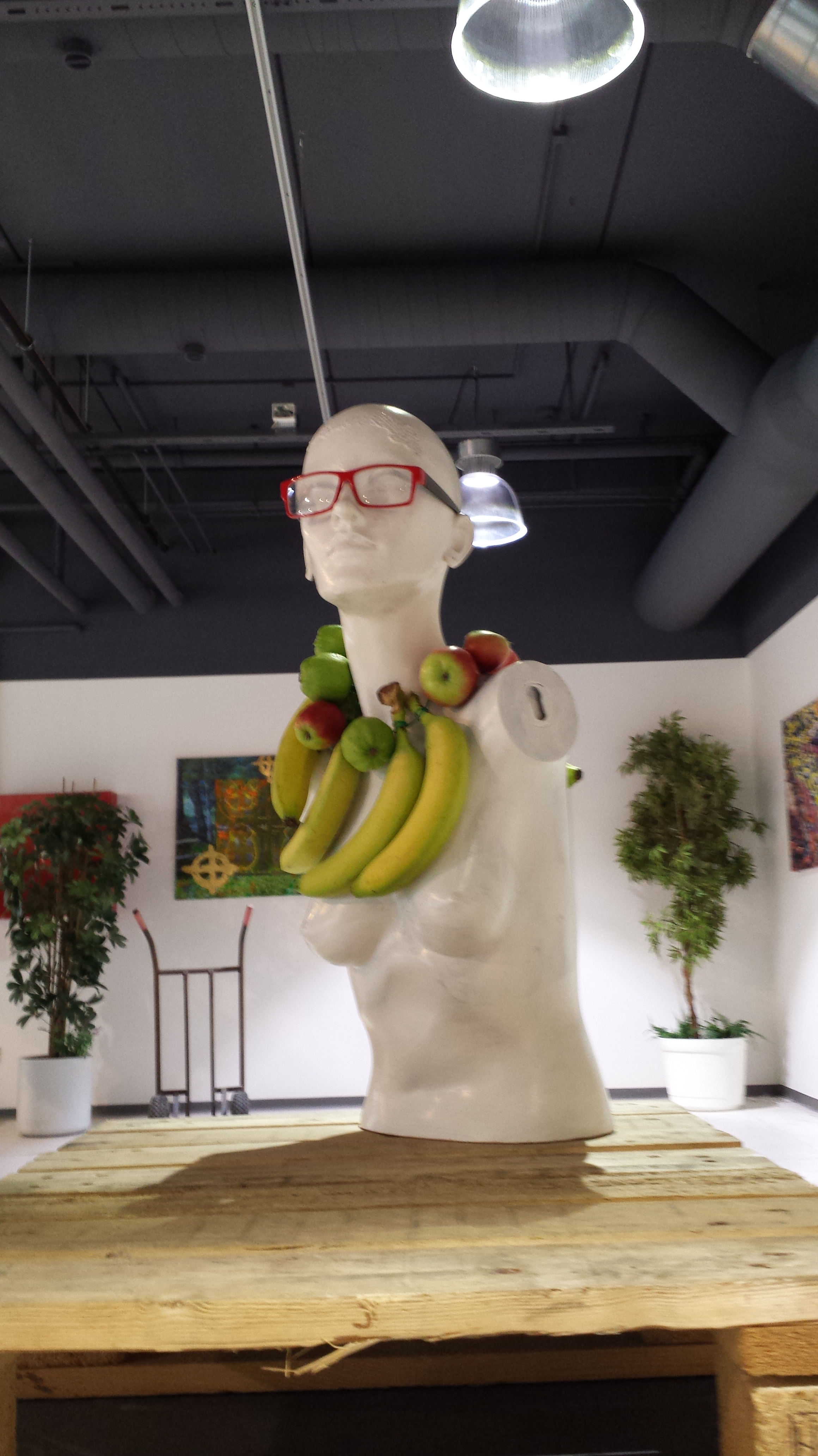
Stakladen’s produce hall is treated as a readymade installation. Pallets and baskets operate like plinths; aisles turn into sightlines. A mannequin bust wearing red spectacles and a necklace of bananas and apples greets you at the center, equal parts hostess, still life and wink. Newspapers quite rightly framed the project as both an exhibition and a small social experiment: what happens when art and groceries swap roles, each making the other more visible?
The works
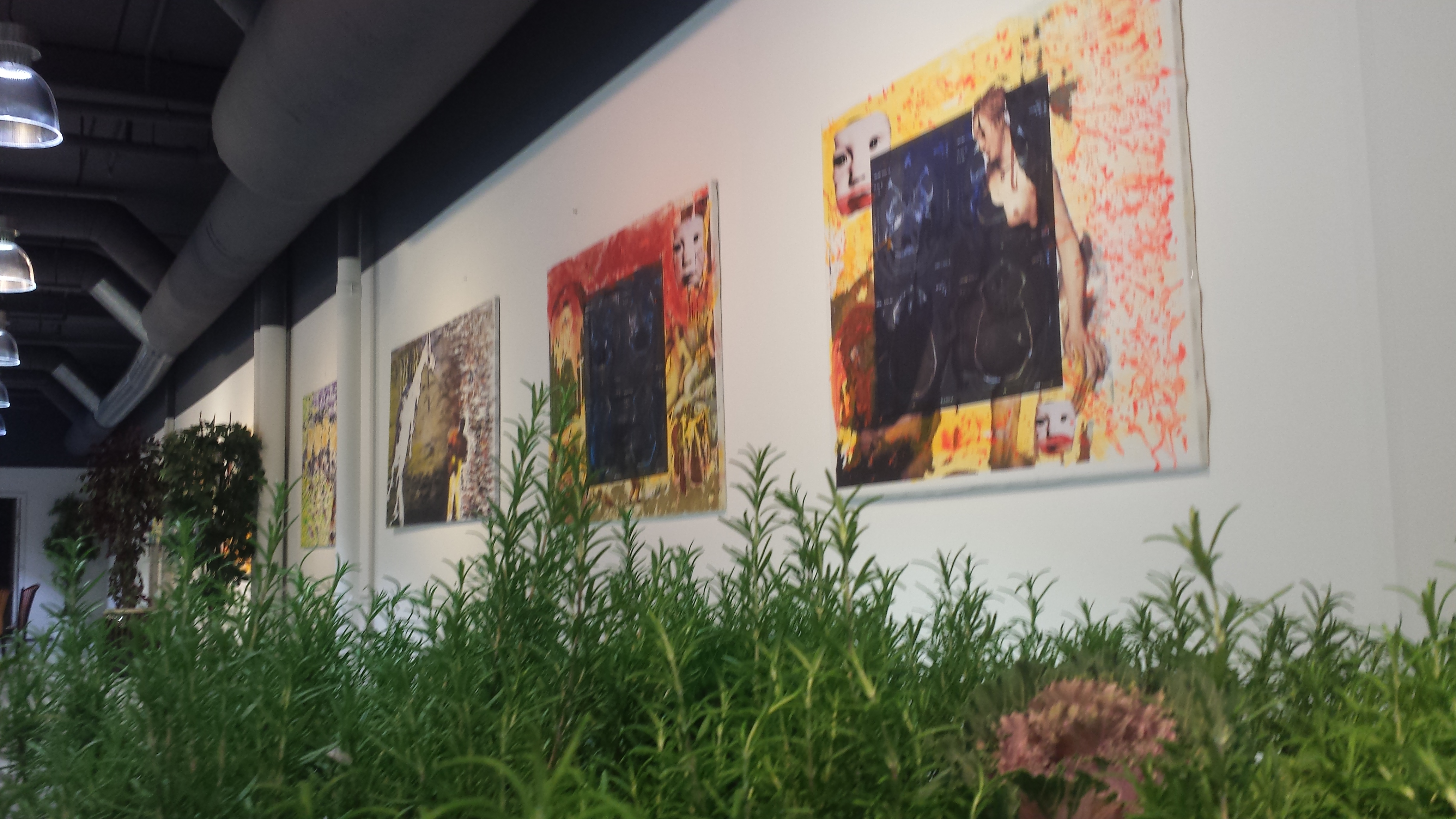
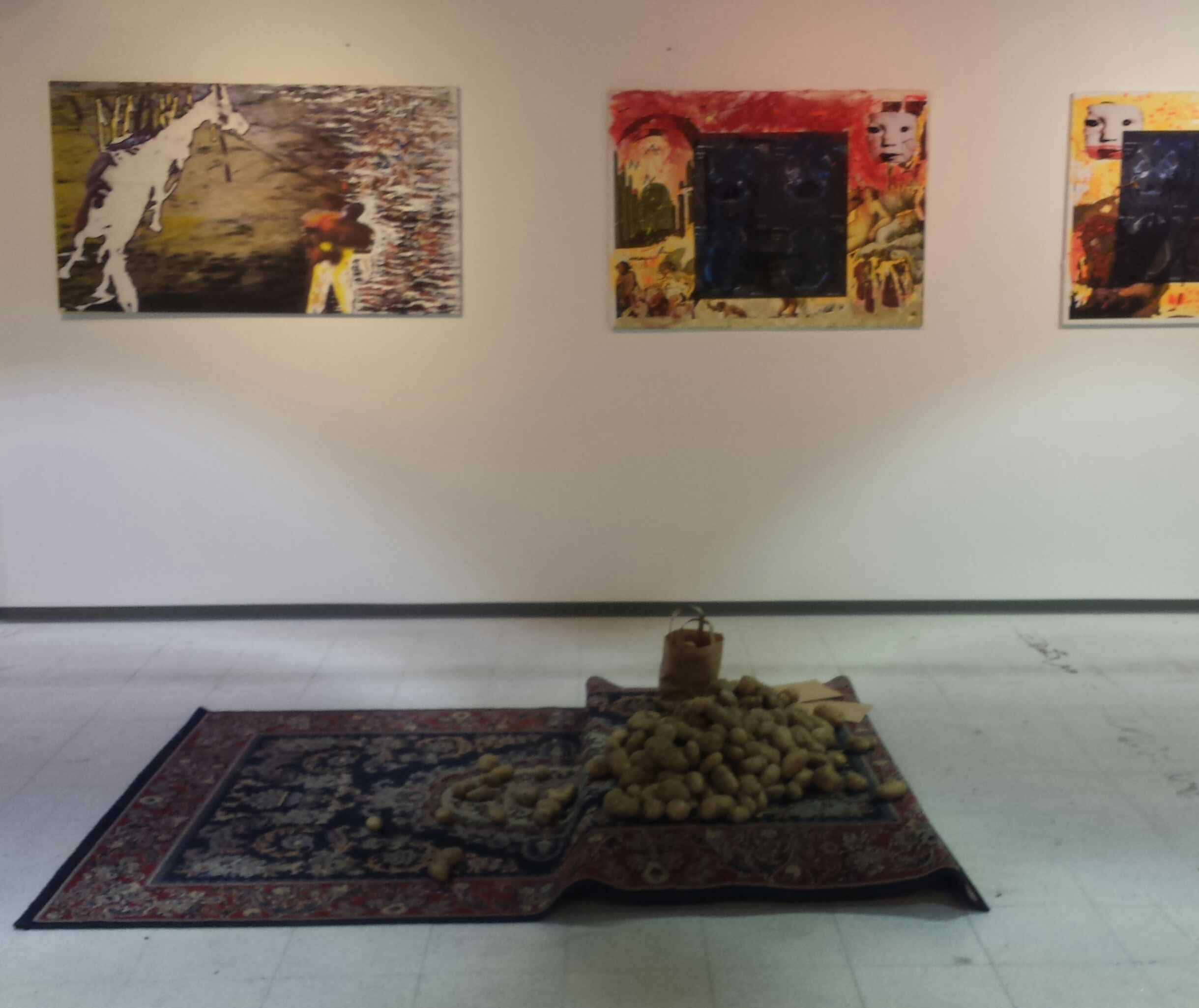
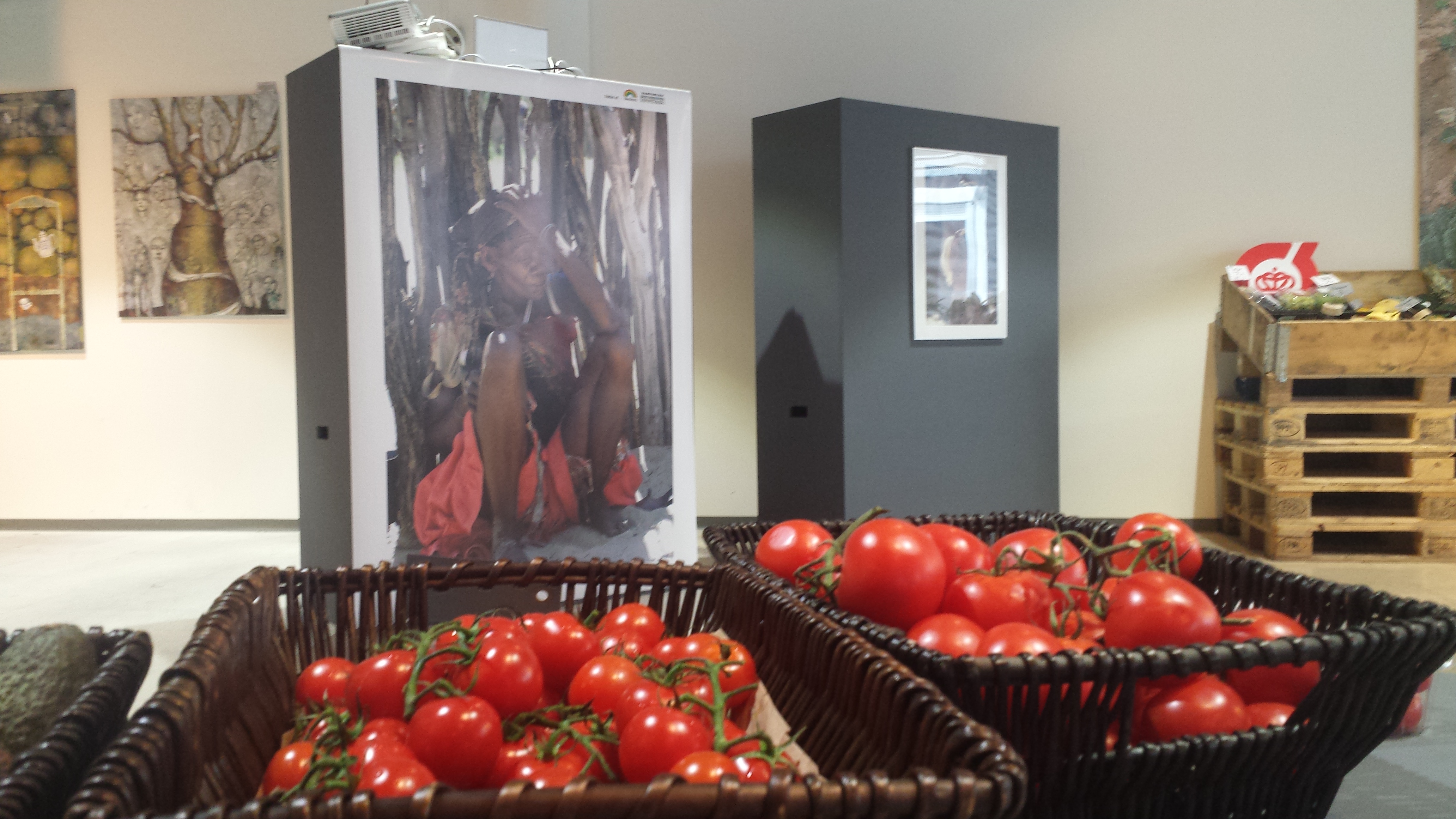
Udbjorg’s large mixed-media pieces, faces emerging through veils of pigment, archival fragments and stamped motifs, play with memory and technology. At a distance they read as portraiture; up close, you see strata: transfers, splashes, handprints, and those enigmatic black squares like X-ray tiles. They sit beautifully against the produce, ripe reds echoing tomato crates, acidic greens vibrating with cucumbers and limes. His photographic works from field journeys (an elder carrying grass; a figure in a tree-root chamber) extend the show’s theme: nourishment, labor, shelter.
Christensen’s contributions (as pictured in the coverage) lean into lively, tactile surfaces, paintings that keep the eye moving, and she collaborates with the site by letting fruit become punctuation: kiwifruit, oranges and avocados become color samples spilled into the foreground. Together the two artists stage a conversation between appetite and image, sustenance and symbol.
Why it works
Placing art in the green section isn’t a gimmick; it’s an argument. The produce turns viewers into participants: shoppers pause, children point, someone compares a pumpkin’s orange to a passage of paint. The market’s industrial lighting becomes a neutral north light; the grey display walls read as pop-up museum partitions. Most importantly, the choreography of everyday life, people drifting in and out, keeps the show porous and alive.
Highlights
- Color dialogues: a tomato-red cascade in the baskets rhymes with the warm registers in Udbjorg’s canvases; a cool run of herbs cools the greens in a neighboring portrait.
- The mannequin still life: sly, funny, and surprisingly affecting, classical bust meets farmers’ market.
- Scale & pacing: big works across long walls are broken up by freestanding panels, creating a rhythm of vistas and close-ups that a traditional gallery would envy.
Verdict
Art in the Produce Aisle is a generous, good-humored exhibition that makes the case for art as part of daily metabolism, not an extra course, but a main ingredient. Udbjorg and Christensen remind us that looking is a bodily act: we taste with the eyes, and we see with the nose and the feet, too. In Ringsted’s Stakladen, the white cube gives way to a green aisle, and the art breathes easier for it.