Corridors, Checkers & Alarms — early-1980s experiments
Welcome to a pocket of the early ’80s where painting misbehaves—jumping off the wall, borrowing shoes and stockings, and wiring itself to lights and buzzers. Across these works you’ll see racing one-point corridors, chessboard grids, and fragments of the body that break the frame. They’re playful, a little cheeky, and designed to make you part of the show.
The interactive corridor pieces (with legs)
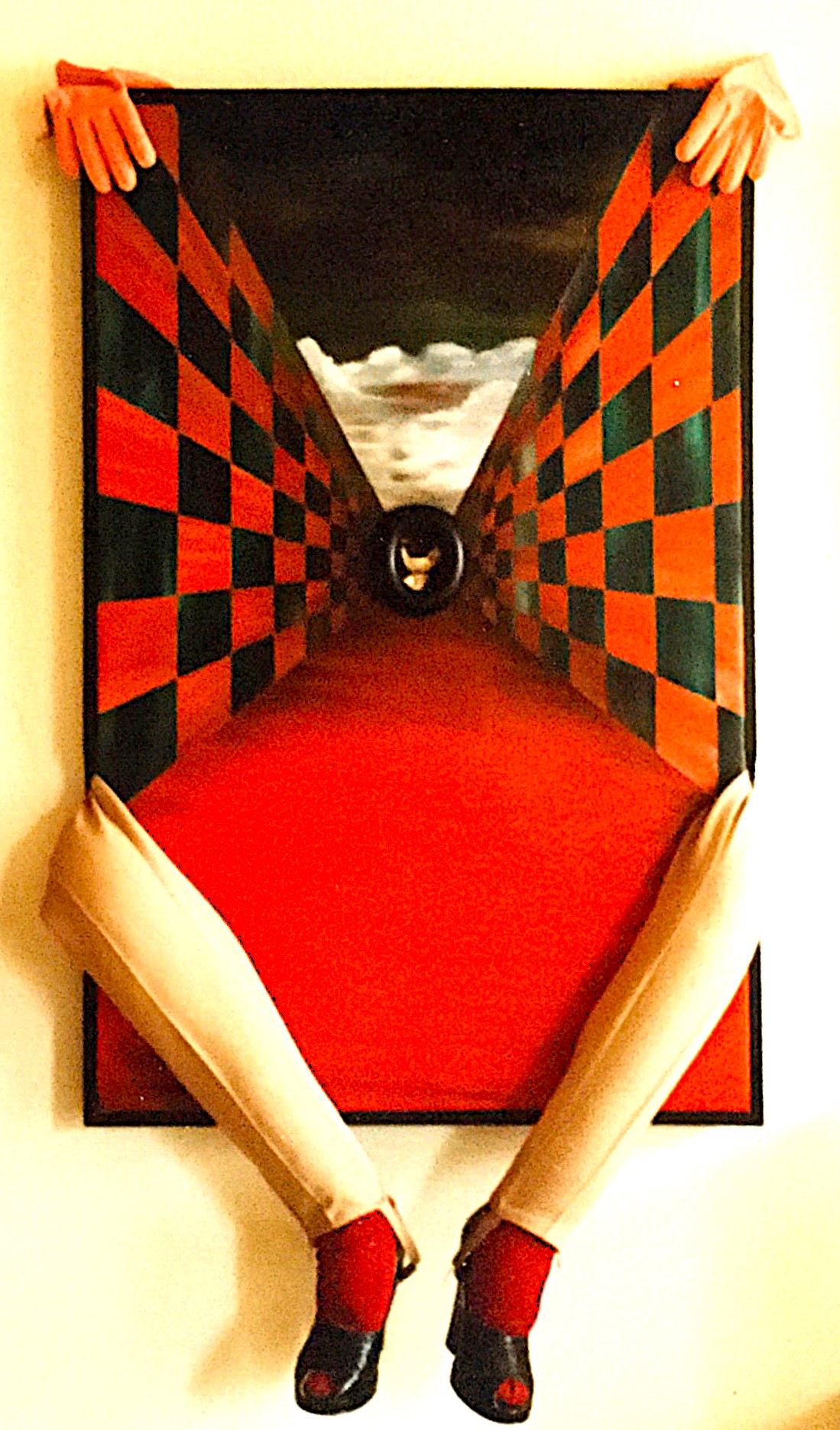
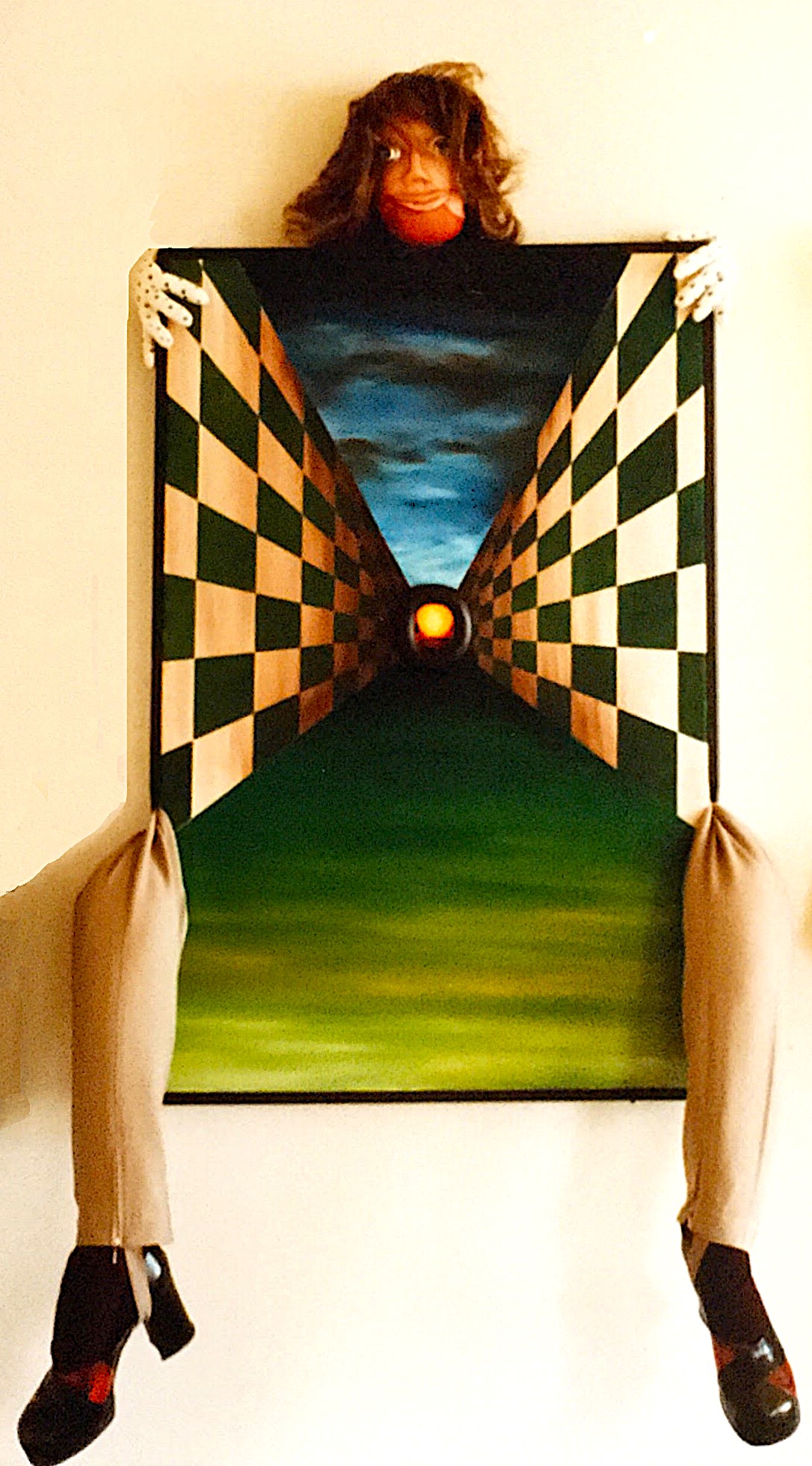
Three relief-paintings stage long checkered corridors that pull your gaze to a dark opening at the center. Hands grip the frame; mannequin legs dangle into the room. Lean in and the work answers back: a light flicks on and a short alarm sounds. Peering through the opening reveals a tiny “backstage”—dioramas of a toilet, a living room, a kitchen. The promise of endless perspective lands you, suddenly, in the most ordinary rooms of daily life. It’s part joke, part critique of how we look at art—and at each other.
How the sensors work (no magic—just physics)
Behind each painting sits a thin metal plate connected to a simple electronic circuit. The human body is slightly conductive (thanks to water and dissolved salts), so when you approach the plate you gently disturb its electric field—its capacitance changes. The circuit notices that tiny change and flips a switch that turns on the light and the alarm. It’s the same principle used in touchless elevator buttons and modern lamp dimmers: your presence becomes the “on” button.
Homage to Mount St. Helens (the hand & web works)
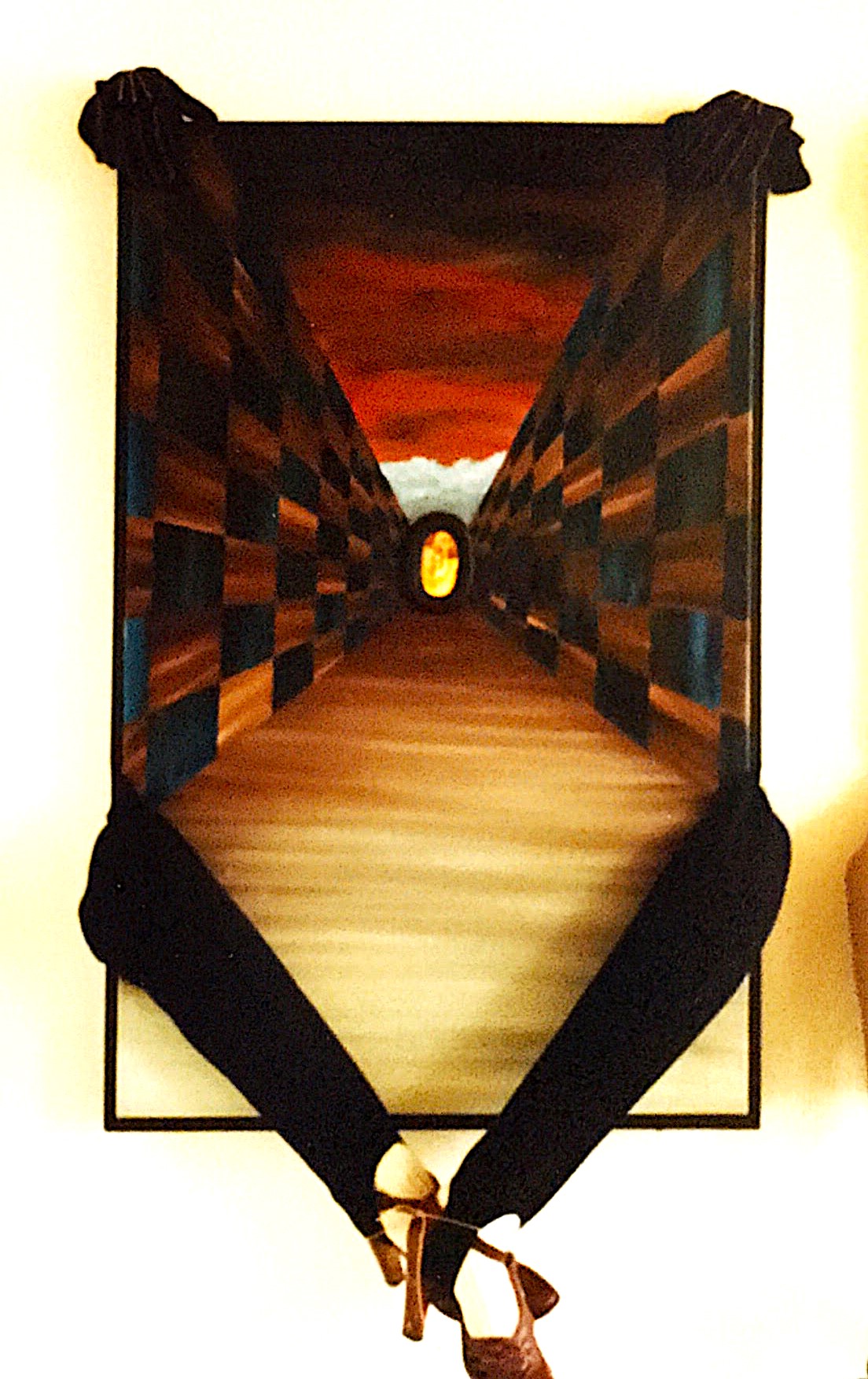
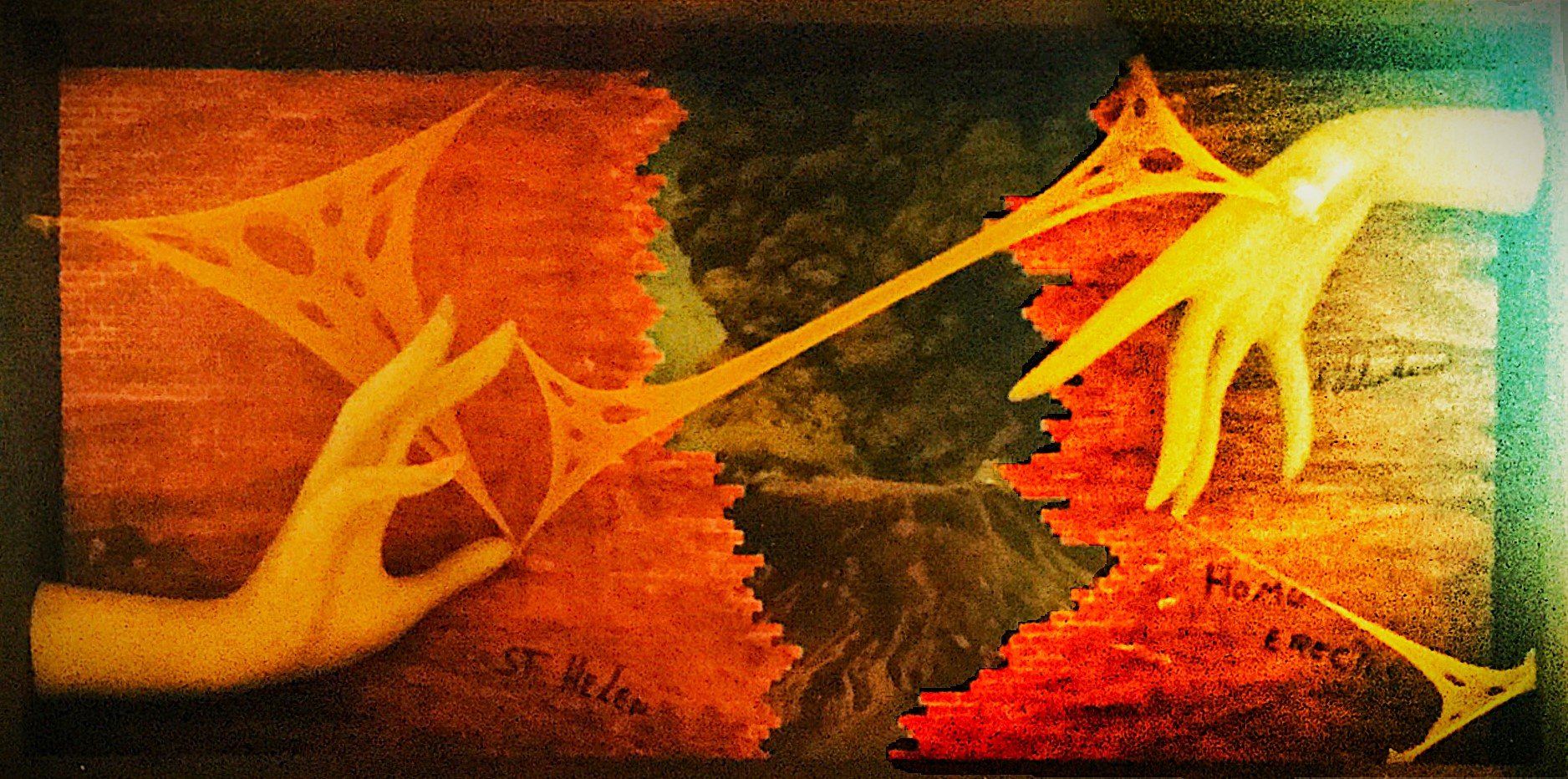
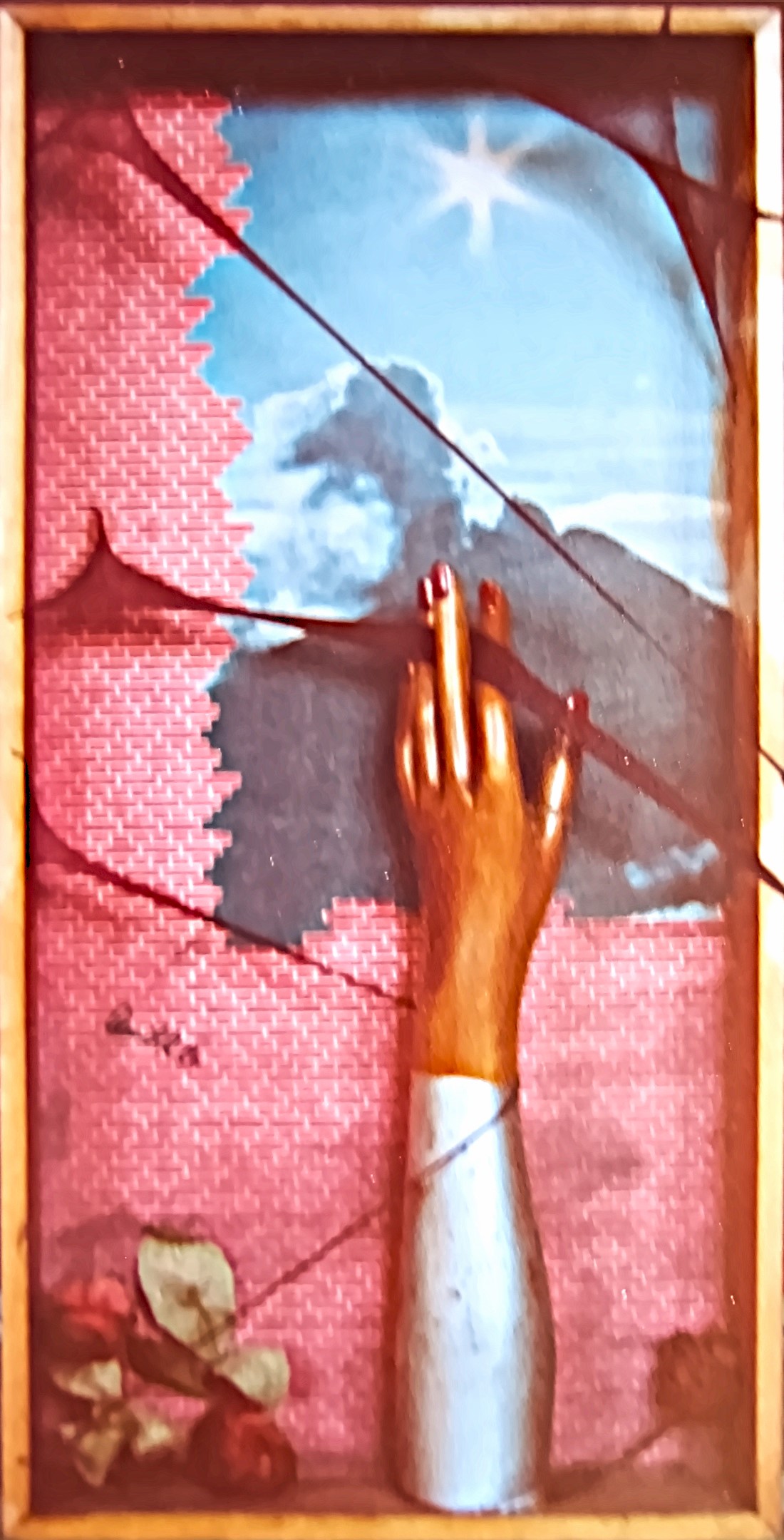
Two pieces feature mannequin hands stretching delicate “webs.” Those webs are actually nylon stockings from the 1960s, pulled into gauzy membranes across a volcanic landscape. They are tributes to Mount St. Helens, which erupted shortly after the artist had visited. The stockings read like improvised bridges—fragile human attempts to hold together forces much bigger than us: geology, time, memory. One version becomes a small shrine, with a starry sky and dried roses; another pairs inscriptions like “Homo erectus” with the volcano, threading human evolution into the earth’s violence.
Other works in the set
- Checker City with Stiletto
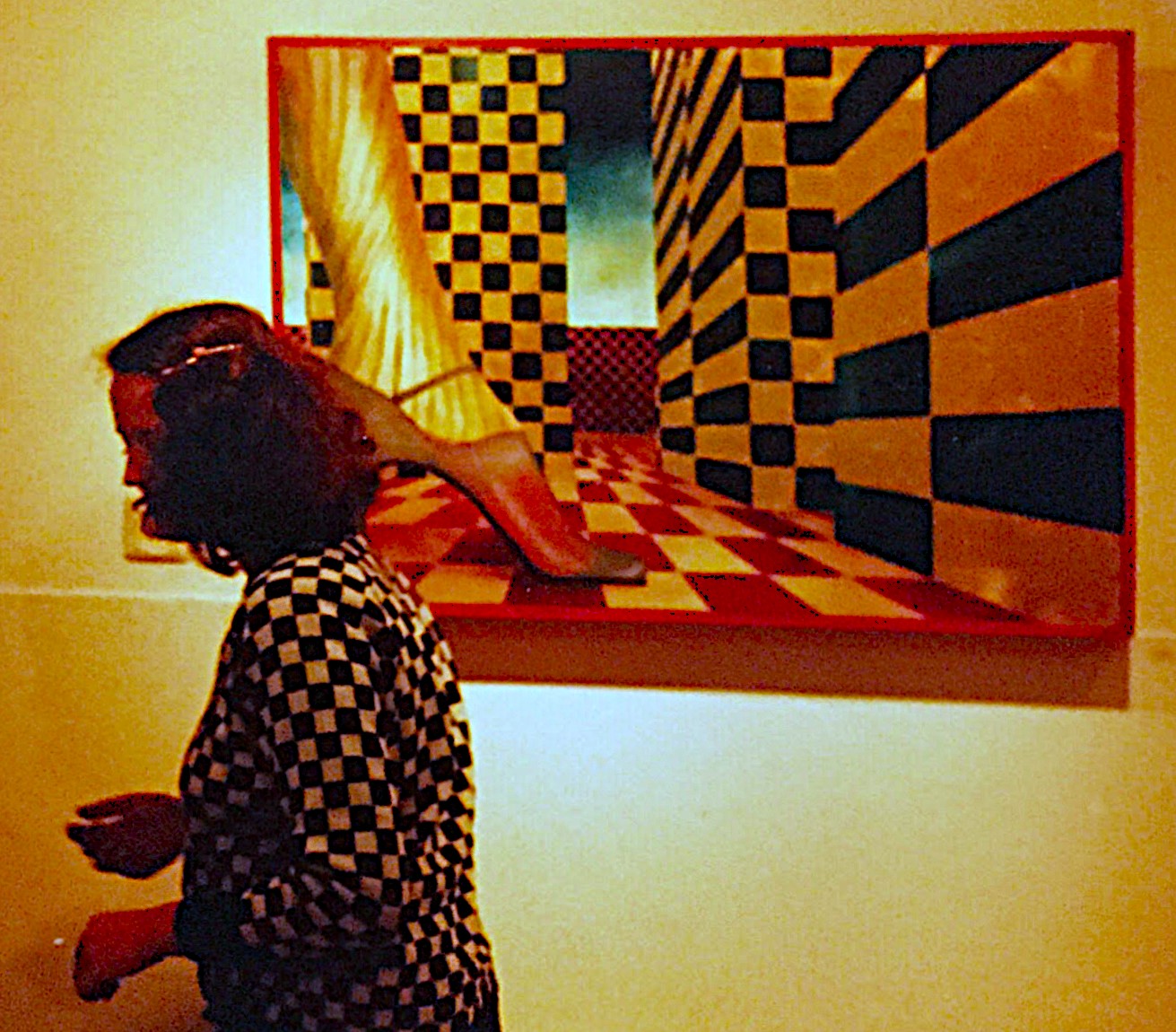
A towering high heel strides through an architectural canyon of grids and stripes. Fashion becomes architecture; scale flips; ornament tramples rational order. It’s witty and a bit punk. - Shoes at the threshold
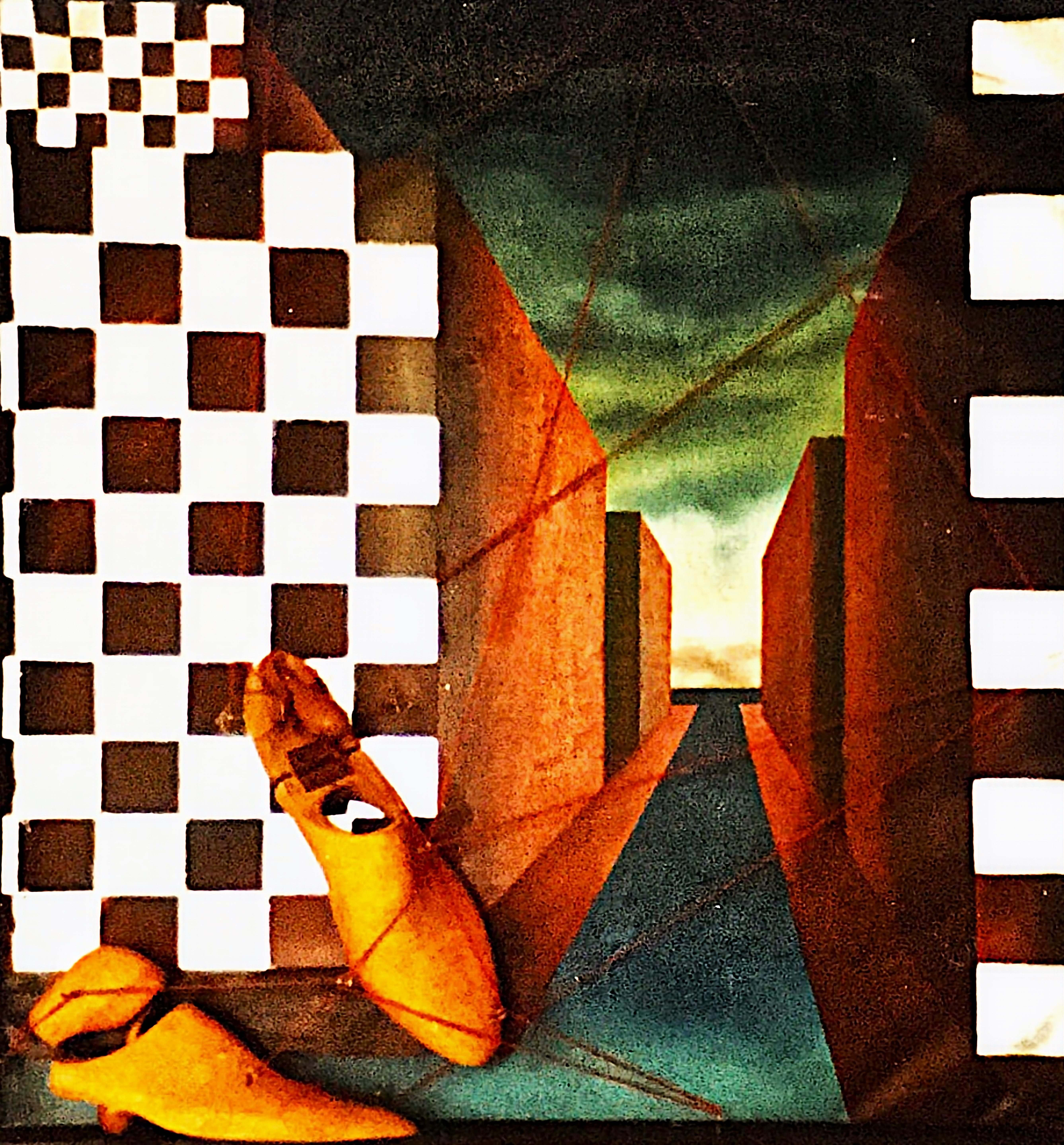
Wooden clogs sit at the edge of a narrow, receding street while a stark checker grid slices the foreground. It’s a picture about entry and refusal—the everyday object paused before the lure of perspective. - Curved-wall vignette
A small study compresses the language—checker cylinder, soft organic forms—into a dark, intimate scene, like a film still from the larger works.
These experiments come from a time of brave materials and unruly ideas: oil paint mixed with plastics, mannequins, nylon, sound, and simple electronics. If you encounter the works in person, don’t be shy—step closer and let them “notice” you. That moment of mutual acknowledgment is the whole point.